Teleprompter for Chiropractors: Record Posture and Home Exercise Videos Patients Actually Follow
Chiropractors can record clear posture and home exercise videos in fewer takes with a teleprompter, keeping reps, holds, and safety cues exact for patients to replay at home.
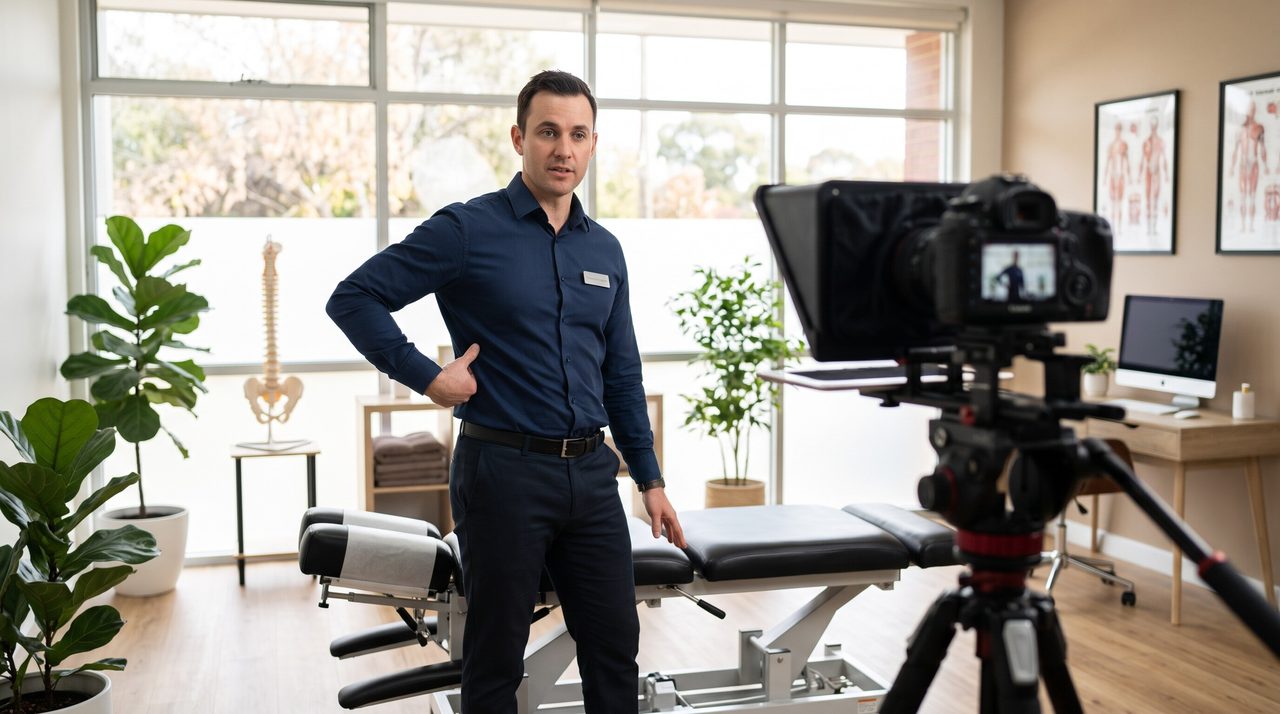
A teleprompter helps a chiropractor record a posture or home exercise video in fewer takes by putting the exact reps, hold times, and safety cues at eye level, so patients hear calm, accurate guidance instead of trying to remember a rushed demo at the end of a visit. Record one short clip per common exercise, read the approved wording, and patients can replay it at home on a tough day.
In office demos compete with everything else in the room. You show a chin tuck once, the patient nods, and by the next morning the angle and the hold are fuzzy. A 90 second video is about 200 spoken words, enough to cover setup, reps, and the 2 or 3 warning signs that mean stop and call the clinic. Patients replay video in the living room, where most home exercises happen.
What posture and exercise videos should a chiropractic clinic record first?
Start with the exercises your team prescribes most often and the ones patients get wrong. Chin tucks, scapular retractions, doorway chest stretches, bridges, and desk resets are strong first topics because the steps are fixed and form matters more than effort. Record one general version of each, then add short clips for post visit care after an adjustment, ergonomic setup at a desk, and lifting form at home.
Then build a standing library: day one care after a visit, ice or heat as your clinic directs, workstation setup, and getting up from sitting every 30 minutes. Five videos can answer most routine home care questions. With Prompter Share, the reader side needs no account and nothing to install. One link opens on a phone, tablet, or TV, while the operator controls the script from another screen.
How do you keep reps and safety cues exact on camera?
Write the script from your standard patient instructions, not from memory between appointments. Keep reps, sets, and hold times in the same order every time, and say the exercise name and its purpose at the start of the clip. Short sentences read well and leave less room for a slipped number. If a cue must never be improvised, such as stop if you feel sharp pain, numbness, or dizziness, say that plainly and slowly.
Context helps patients take the work seriously. A head in neutral weighs about 10 to 12 pounds, and for every inch it drifts forward, about 10 pounds of extra pressure loads the neck and upper back. Mark the lines that matter most. Put a cue marker before each form check and warning sign so you pause and give it weight. Prompter Share Pro at $15 per month includes countdown and cue markers, a reading line, and phone remote control, so a chiropractor recording solo can pause, go back a line, and restart without walking behind the camera.
What is the best remote teleprompter setup for a chiropractic clinic?
The best setup fits into the quiet gaps of a clinic day. Put the camera on a tripod in an empty treatment room, place the viewer screen close to the lens, and leave space beside you to demo the move without stepping out of frame. Standing 5 to 7 feet from the camera with larger text reads as natural eye contact. Record a 20 second test clip first to check framing, lighting, and that hallway or front desk noise does not carry into the audio.
Prompter Share is a web based remote teleprompter. The script is sent once, then its motion is described so both screens run off one shared clock, and a device that drops off Wi Fi rejoins on the right line. A front desk team member can run the operator screen from reception while you read in the treatment room, and multiple viewer screens stay on the same line. Wake lock keeps a tablet awake mid take, and mirroring with horizontal and vertical flip supports beam splitter rigs if your clinic films in a small studio corner.
Speed control does more for trust than gear does. Operator controls include pause, back, forward, speed presets down to about 0.45 lines per second, keyboard shortcuts, and a settable count in. Set the pace during rehearsal, not during the take. Rehearsing alone is free, because only time with a viewer connected and the script moving counts toward the free plan and its 2 minutes of remote prompting per session. The free plan also includes 1 viewer screen, 3 saved scripts, mirroring, wake lock, and fullscreen, with unlimited restarts.
How should you structure each home exercise clip?
Use the same four part shape every time. First, name the exercise, what it helps, and who should skip it. Second, walk through setup and form, one action per sentence, then demo it slowly. Third, give the exact dose, such as 3 sets of 10 reps with a 3 second hold, in the same words as your printed handout. Fourth, close with warning signs and the phone step to take if something feels wrong.
- Film in a quiet treatment room and keep most clips under 2 minutes each
- Say every rep count and hold time out loud in full, including how often per day
- Demo the move at half speed first, then once at normal pace
- End by telling patients where the same steps appear on their printed handout
Batch the work. Script 4 or 5 videos in one sitting, import them with .txt and .docx import on Pro, and keep them in folders with full text search, named by exercise rather than by date. Update a rep line in the saved script before the next recording, so the library stays current.
Frequently asked questions
Does the person reading need an account or an app?
No. The talent side needs no account and nothing to install. One link opens the viewer on a phone, tablet, or TV, which makes it easy for a new associate or rehab aide to read a house script.
How much does Prompter Share Pro cost for a chiropractic clinic?
Pro is $15 per month and adds unlimited prompting time, unlimited scripts in folders, unlimited viewer screens, and phone remote control. The free plan covers short tests with 2 minutes of remote prompting per session, 1 viewer screen, and 3 saved scripts.
Can 2 staff members prompt a video at the same time?
Yes. One person runs the operator screen and controls pause, speed, and restarts, while the person on camera reads and demos. Because both screens run off one shared clock, the reader and the operator stay on the same line even in different rooms.
Add Prompter Share as a preferred source on Google (opens in a new tab)