Teleprompter for Veterinarians: Record Pet Care Videos Owners Actually Follow
Veterinarians can record clear pet care and discharge videos in fewer takes with a teleprompter, keeping medication doses, warning signs, and follow up steps exact.
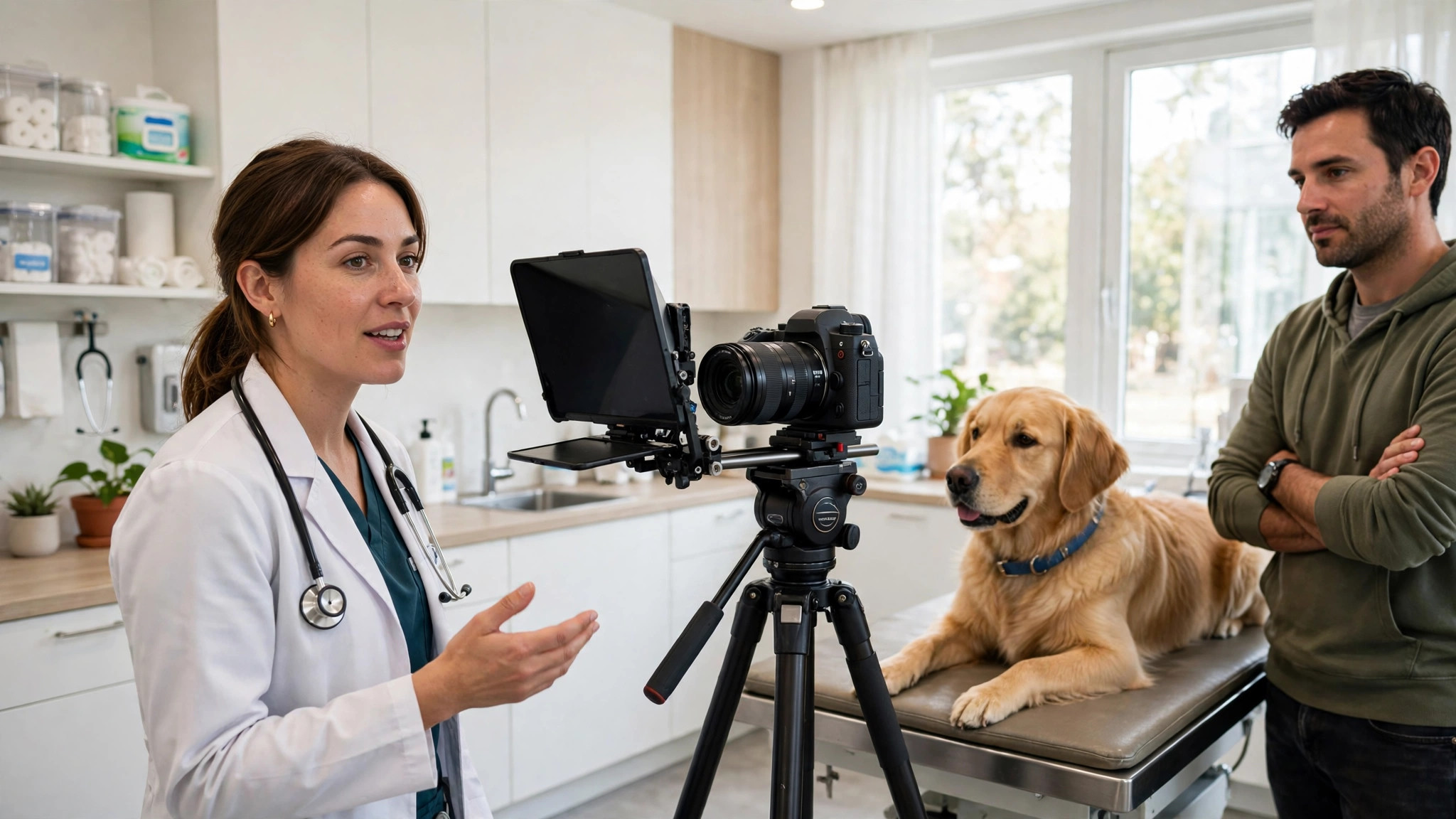
A teleprompter helps a veterinarian record a pet care video in fewer takes by putting the exact medication steps, warning signs, and follow up plan at eye level, so owners hear calm, accurate instructions instead of a rushed summary at the front desk. Record one short clip per condition or procedure, read the approved wording, and clients can replay it at home the moment they need it.
Discharge conversations happen at the worst moment for listening. The pet is pulling toward the door, the owner is holding a carrier, a receipt, and a bag of medication, and retention of spoken instructions drops fast. A 90 second video is about 200 spoken words, enough to cover the dose, the schedule, and the 3 warning signs that mean call the clinic today. Owners replay video at the kitchen counter, which is exactly where the medication is given.
What pet care videos should a veterinary clinic record first?
Start with the instructions your team repeats most often and the ones owners get wrong. Post surgery care, dental home care, ear medication, insulin injections, and weight management plans are strong first topics because the steps are fixed and the cost of a mistake is real. Record one general version of each, then add short personal clips when a case needs a specific dose or a different recheck date.
Then build a small standing library: what to expect after anesthesia, how to give a pill without a fight, how to clean ears safely, and when a symptom is an emergency. Five standing videos can answer the bulk of routine aftercare questions for a small practice. With Prompter Share, the reader side needs no account and nothing to install. One link opens on a phone, tablet, or TV, while the operator controls the script from another screen.
How do you keep medication wording exact on camera?
Write the script from the written discharge sheet, not from memory between appointments. Keep doses in the same units and the same order as the printed instructions, and say the pet's name and the medication name at the start of the clip. Short sentences read well and leave less room for a slipped number. If a step must never be improvised, such as doubling a missed insulin dose, say that plainly and slowly.
Mark the lines that matter most. Put a cue marker before each dose change and each warning sign so you pause and give it weight. Prompter Share Pro at $15 per month includes countdown and cue markers, a reading line, and phone remote control, so a vet recording solo in an exam room can pause, go back a line, and restart without stepping around the patient to reach the camera.
What is the best remote teleprompter software for a busy clinic?
The best setup fits into the gaps of a clinic day. Put the camera on a tripod in the exam room you already use, place the viewer screen close to the lens, and keep the text block narrow so your eyes stay steady. Standing 5 to 7 feet from the camera with larger text reads as natural eye contact. Record a 20 second test clip first to check framing, lighting, and that no cages or barking carry into the audio.
Prompter Share is a web based remote teleprompter. The script is sent once, then its motion is described so both screens run off one shared clock, and a device that drops off Wi Fi rejoins on the right line. A technician in the treatment area can run the operator screen while the vet reads in the exam room, and multiple viewer screens stay on the same line. Wake lock keeps a tablet awake mid take, and mirroring with horizontal and vertical flip supports beam splitter rigs if your clinic films in a dedicated studio corner.
Speed control does more for trust than gear does. Operator controls include pause, back, forward, speed presets down to about 0.45 lines per second, keyboard shortcuts, and a settable count in. Set the pace during a rehearsal read, not during the take. Rehearsing alone is free on the free plan, because only time with a viewer connected and the script moving counts toward its 2 minutes of remote prompting per session. The free plan also includes 1 viewer screen, 3 saved scripts, mirroring, wake lock, and fullscreen, with unlimited restarts.
How should you structure each discharge clip?
Use the same four part shape every time, so owners learn how to listen. First, name the pet, the procedure, and how today went in one sentence. Second, walk through the care steps in order, one action per sentence. Third, name the warning signs in plain words, with the most urgent first. Fourth, close with the recheck plan and the exact phone step to take if something looks wrong tonight.
- Film in the exam room with the pet calm or resting, and keep clips under 2 minutes each
- Say every dose out loud in full, including the time of day and whether food changes it
- Show the medication bottle and any tool, such as an insulin syringe, while you describe it
- End by telling owners where the same steps appear on their printed discharge sheet
Batch the work. Script 4 or 5 standing videos in one sitting, import them with .txt and .docx import on Pro, and keep them in folders with full text search, named by condition rather than by date. A technician can update a dose line in the saved script before the next recording, so the library stays current as protocols change.
Frequently asked questions
Does the person reading need an account or an app?
No. The talent side needs no account and nothing to install. One link opens the viewer on a phone, tablet, or TV, which makes it easy for an associate vet or a relief vet to read a clinic script on their first shift.
How much does Prompter Share Pro cost for a clinic?
Pro is $15 per month and adds unlimited prompting time, unlimited scripts in folders, unlimited viewer screens, and phone remote control. The free plan covers short tests with 2 minutes of remote prompting per session, 1 viewer screen, and 3 saved scripts.
Can 2 staff members prompt a video at the same time?
Yes. One person runs the operator screen and controls pause, speed, and restarts, while the person on camera reads. Because both screens run off one shared clock, the reader and the operator stay on the same line even in different rooms.
Add Prompter Share as a preferred source on Google (opens in a new tab)