Teleprompter for YouTube Shorts: Nail the 60-Second Script in One Take
A studio playbook for solo YouTubers: script budgeting, the three-beat structure, prompter placement, scroll speed, and a one-take checklist for 60-second vertical videos.
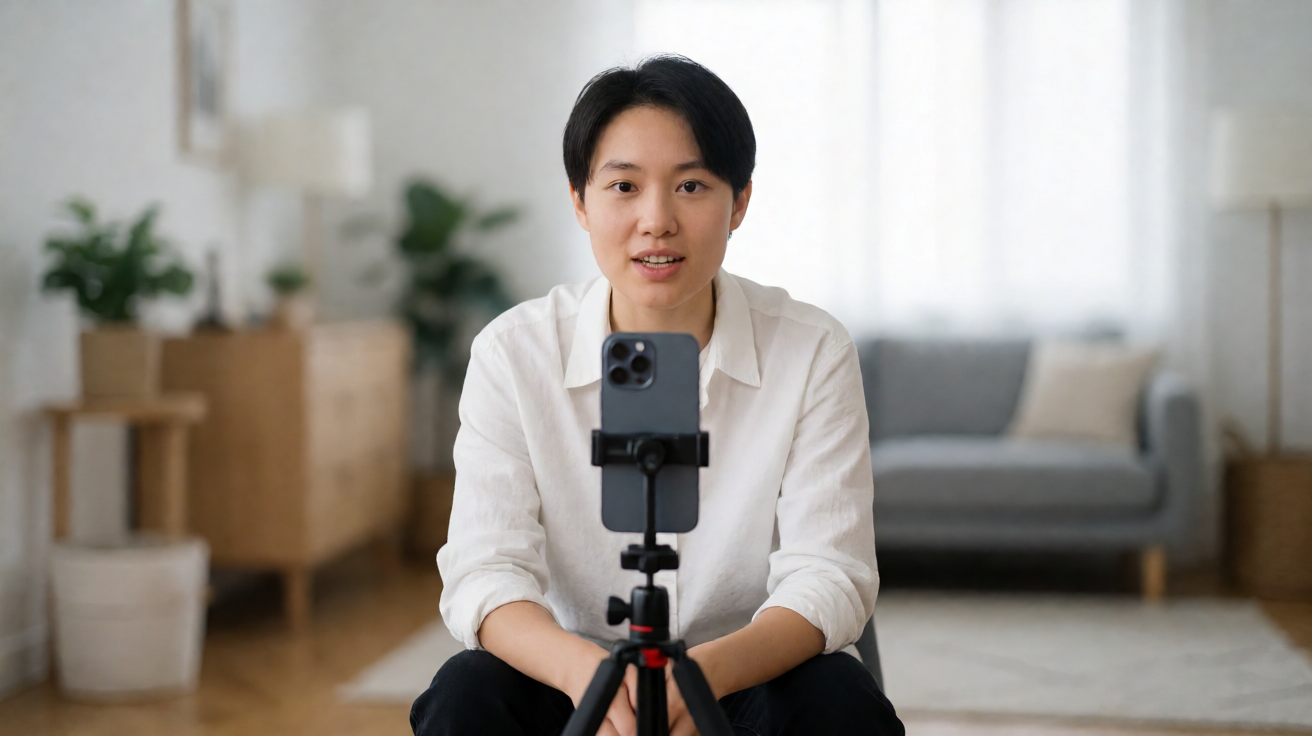
Most creators wing their YouTube Shorts. They hit record on the phone, talk for a minute, stumble halfway, and then reshoot the whole thing three more times. By take four the energy is gone and the clip sounds like someone reading a legal disclaimer. A teleprompter fixes this, but only if you treat a 60 second vertical script like its own format. The long form habits you know from desktop teleprompter work do not transfer cleanly to a 9:16 frame.
Why Shorts are the hardest teleprompter job
A Short is a sprint. You have roughly one second to earn the swipe past, about five seconds to set the premise, and fifty more to deliver one idea and get out. There is no room for throat clearing, no room for a second example, and no room for the slow wind up that works in a twelve minute video. Every wasted word is a visible dip in energy, and viewers swipe the moment your eyes drift or your pace stalls. That is why Shorts benefit more from a teleprompter than long form does. The goal is not to read perfectly. It is to know exactly where the next sentence lands so your delivery stays urgent from frame one.
The 120 to 150 word budget
Most creators speak 135 to 155 words per minute on camera when they sound natural. A sixty second Short therefore holds 120 to 150 words, and you want to land in the lower half of that range. A script at 130 words leaves room for a pause before the payoff, a beat after the hook, and the small human stumbles that make you sound like a person instead of a text to speech engine. A script at 155 words forces you to sprint, and sprinting reads as anxious on a vertical frame.
- Write 125 to 135 words for a tight, punchy Short with breathing room.
- Read it aloud with a timer before filming. If you land past 62 seconds, cut words, do not speed up.
- Count your hook separately. The first sentence should be 8 to 12 words, sharp enough to survive on its own.
- Leave 3 to 5 seconds at the tail for your subscribe or comment call to action.
Build the script in three beats
Every strong Short runs the same skeleton, and writing to it makes the teleprompter your ally instead of your crutch.
Beat one is the hook, seconds 0 to 3. State the payoff or the provocation immediately. The hook is a promise. Everything after it pays the promise off.
Beat two is the proof, seconds 4 to 45. One idea, delivered in three short points. Three points gives the viewer a sense of progress, and progress is what keeps a thumb off the swipe. Write each point as a single sentence you can land with a pause.
Beat three is the payoff, seconds 46 to 60. Restate the promise in one line, then tell the viewer what to do next. Comment, follow, watch the long version. If the payoff just ends, the viewer swipes away and YouTube reads that as a weak ending.
Mark your beats in the teleprompter script with blank lines between each. When your eyes hit the gap, the delivery naturally shifts energy without you thinking about it.
Place the text where your eyes already are
The single biggest giveaway in Shorts is eye drift. In 9:16 your face fills the frame and any sideways glance reads as shifty. The script has to sit as close to the front camera lens as physically possible.
- Use a large font. Crank it up until three to four words fit on a line. Big text lets you push the device back without squinting, and squinting is visible.
- Keep lines short. Long wrapped lines make your eyes scan side to side. Short lines let your gaze stay locked near the lens.
- Dim everything else. Notifications, battery warnings, a bright home screen bleeding through, kill them all. On phones, use wake lock so the screen never sleeps mid take.
- Test the sightline. Record ten seconds, watch it back, and look only at your own eyes. If they dart, the text is too far from the lens or too small.
Scroll speed for vertical delivery
Here is the counterintuitive part. For a Short, set the scroll slower than you think you need. A slow scroll does not mean a slow delivery. It means the next line is always already there when your eyes drop to it, so you never feel chased by the text. Being chased is what creates the panicked, glazed reading look. When the script waits for you, you control the pace and the urgency comes from your voice instead of from racing the screen.
Common Shorts mistakes and how to fix them
- Reading straight through without breath. Mark two pause points in the script with a slash or an ellipsis. A pause on purpose sounds confident. A pause from panic sounds lost.
- Monotone energy. Underline or bold your danger words, the numbers, the names, the one word that carries the joke. Emphasis is a choice, and the script should tell you where to make it.
- Overwriting the intro. If your first sentence explains who you are, delete it. The first three seconds belong to the promise, not your credentials.
- Filming cold. Read the script aloud once, standing where you will film, before you press record. Your mouth needs one warm up lap with the words. Cold reads sound cold.
- Chasing the last second. If the script does not fit in sixty seconds, cut it. A rushed ending poisons the whole take.
The one take checklist
- Script is 125 to 135 words, timed aloud under 62 seconds.
- Hook is 8 to 12 words and sits alone at the top.
- Three beats separated by blank lines, payoff and call to action written out.
- Font large enough for three to four words per line, text hugging the front camera.
- Scroll speed set slow, wake lock on, notifications silenced.
- One warm up read, then record.
Shorts reward creators who respect the constraint. Sixty seconds is not a limitation to fight, it is an editor that forces you to be interesting. The teleprompter is the mechanism that lets you deliver the interesting version on the first take, when your energy is highest. If you are tired of reshoot number four, set up a real cloud teleprompter workflow. Prompter Share runs on your phone or tablet with wake lock, line markers, and zero lag scrolling, so your script is ready before the camera is.