How Many Words Should Your Video Script Be? A Teleprompter Length Guide
Match your script to your runtime with the 130 to 150 words-per-minute rule, a runtime word-count table, and teleprompter pacing tips that keep every read on time.
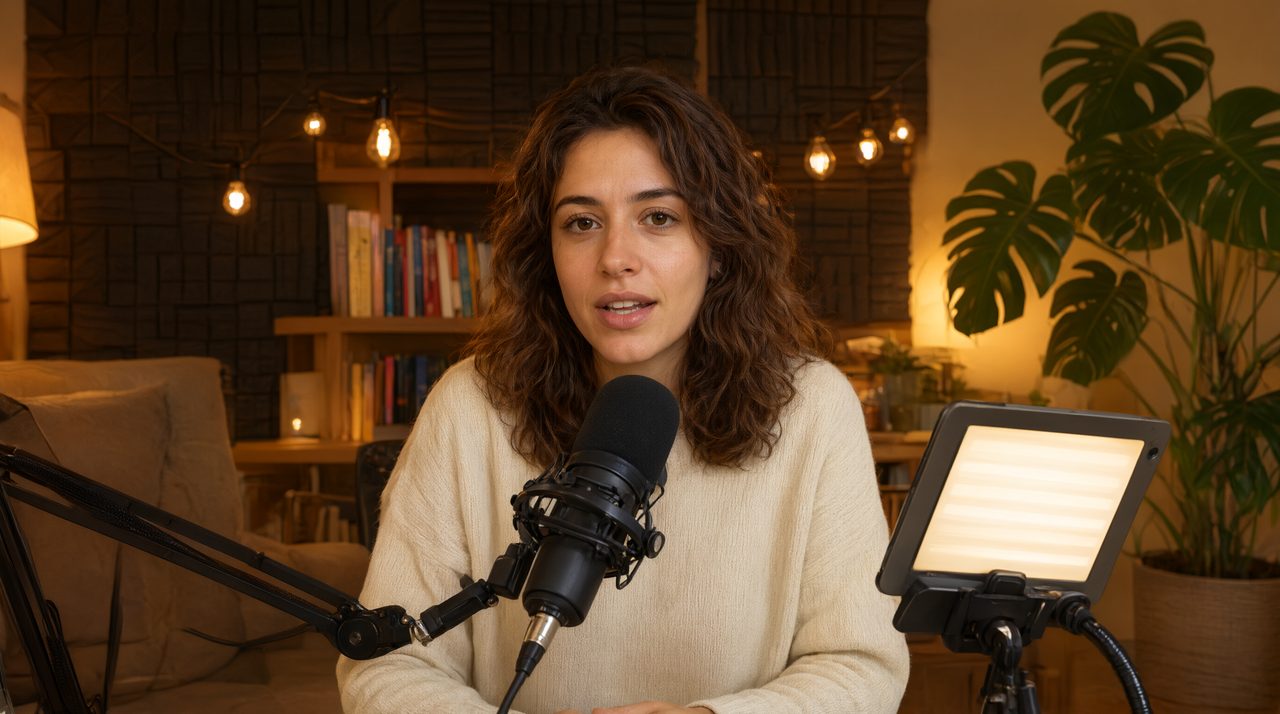
How many words should your video script be? For a talking-head video, plan on 130 to 150 words per minute of finished video, so a five-minute script lands around 650 to 750 words. That single band answers most script-length questions, because practiced on-camera delivery settles in it for nearly everyone. The interesting part is what makes a real read drift off the formula, and how you correct for it before you burn a recording session fixing a script that was the wrong length from the start.
How many words fit a 60-second Short?
Shorts, Reels, and TikToks are the tightest math in video. At 130 to 150 words per minute, a 60-second video wants 130 to 150 words, which is roughly three short paragraphs. Do not try to squeeze 200 words into a minute. The chipmunk read that follows kills retention. If your draft has 180 words, you do not need a faster read, you need a shorter draft.
What does a 10-minute video script look like?
Here is the quick-reference table I keep taped next to every prompter station:
- 60 seconds: 130 to 150 words
- 2 minutes: 260 to 300 words
- 5 minutes: 650 to 750 words
- 10 minutes: 1,300 to 1,500 words
- 15 minutes: 1,950 to 2,250 words
- 30 minutes: 3,900 to 4,500 words
A cold read runs 10 to 15 percent slower than the formula, because you are decoding unfamiliar phrasing on the fly. A rehearsed read runs 5 to 10 percent faster, because your brain has already built the rhythm. So treat the table as the middle of the band for a rehearsed read, not a guarantee for a first take.
Why do script reads drift off the formula?
Three things move a real read off the word-count math. First, pauses. A beat after a punchline, a breath before a big claim, the silence after a question you want the viewer to sit with: all of it eats runtime without adding a single word. Second, demonstration time. If you narrate while showing a product, a screen, or a technique, the showing takes two to three times longer than the telling. A 30-word demo caption can easily consume a full minute of video. Third, ad-libbing. The moment you depart from the script to riff on a point, the formula no longer applies to that stretch. The formula measures finished video minutes, not raw recording minutes. Plan for it: write 5 percent short of your target, because slowing the scroll to fill a gap is much easier than trimming a bloated read.
How do you structure a script so it lands on the runtime?
Write the script in sections with a clear label per section, then check each section against the table before you ever step in front of the camera. If your intro is 200 words and the table gives you 140 for a 60-second video, the problem is visible before you record a frame. Mark section breaks with cue markers so you can jump straight to the problem section for a pickup instead of re-reading the whole script. Set your scroll speed to match your rehearsal pace, not your fantasy pace: the number on the prompter should reflect the read you actually do, nerves included. And do a timed cold read on the day, because the read in your head the night before is always 10 percent faster than the one your body performs under lights. In Prompter Share, the reading line and cue markers keep the section structure visible, speed presets go down to about 0.45 lines per second for deliberate reads, and the Pro countdown gives you a clean lead-in so the first line lands on time.
What do you do when the read runs long or short?
If the timed read runs long, do not speed up. Cut one example per section, trim adjectives and adverbs that do not change meaning, and tighten transitions to single sentences. Most 10 percent overruns come from examples that repeat a point the first example already made. If the read runs short, resist padding. Slow the scroll speed one notch, add a breath beat before your two most important lines, and expand one example with a concrete detail instead of a vague claim. The difference between a read that is 30 seconds short and one that feels 30 seconds short is pacing, not words. A deliberate pace with real pauses reads as confidence. A padded script with filler phrases reads as stalling, and the retention graph will show you exactly where viewers noticed.
Before your next shoot day, take ten minutes to time your script instead of guessing at it. Paste it into Prompter Share, do one cold read alone (rehearsing alone is free, with unlimited restarts), and check the runtime against the table. If it lands in the band, you will walk into the recording session knowing the script is the right length, which is one less thing for your brain to monitor while you perform. Your teleprompter, shared in real time, should carry the words. You carry the delivery.
Does 150 words per minute work for voiceover too?
Mostly. Conversational voiceover sits in the same 130 to 150 band. Fast promo reads for commercials push 160 to 180, but face-to-camera delivery runs slower because pauses, eye contact, and facial expressions do timing work that voice alone cannot. Use the same table, then adjust one band down if the piece is high energy.
How long is a two-minute script?
260 to 300 words, roughly one double-spaced printed page. It is a useful sanity check: if your two-minute video draft fills two full pages, it is really a three-minute video wearing a two-minute costume, and you should cut before you record.
What if the runtime must be exact, like a 30-second ad?
Write 70 to 75 words, rehearse with a stopwatch, and record at least three full takes. Pick the middle take, not the fastest. In Prompter Share, the Pro countdown and cue markers let you rehearse the exact lead-in and section timing until the 30 seconds lands on cue instead of on luck.
Add Prompter Share as a preferred source on Google (opens in a new tab)